%201.svg)
9 Surprising traditions from around the world
Think you know what to expect on holiday? These nine surprising traditions might make you think again. Discover the stories behind them and how to join in respectfully when abroad.

One of the best things about travelling is discovering that everyday life doesn’t look the same everywhere.
A greeting may involve pressing noses. New Year’s Eve might mean eating grapes against the clock. And in some parts of Europe, you could find yourself watching people throw oranges or parade through the streets dressed as horned creatures.
These customs may seem unusual to visitors, but many have been passed down through generations and carry important cultural meaning. Understanding what’s happening – and how to respond respectfully – can help you feel more comfortable and connected to the places you visit.
Here are nine surprising traditions from around the world that may have you wondering whether you’re really seeing what you think you are.
* Any recommendations made about the insurance is general advice only and doesn't take account of your particular needs and circumstances. You must read the Combined Financial Services Guide and Product Disclosure Statement and Target Market Determination before you decide to buy the travel insurance to ensure that it meets your needs and financial situation. Sub-limits, terms, conditions, and exclusions may apply. Please refer to the PDS for full details. The FSG/PDS also contains information about the Cooling Off Period, and how you can access EAA’s privacy policy and complaints handling procedures.
1. Eating 12 grapes at midnight in Spain
Where: Across Spain
When: New Year’s Eve
As midnight approaches on 31 December, people across Spain prepare to welcome the new year with 12 grapes – one for every chime of the clock. The aim is to eat each grape in time with the chimes. According to tradition, anyone who finishes all 12 will be rewarded with good luck and prosperity during the year ahead.
The most famous public celebration takes place beneath the clock in Madrid’s Puerta del Sol, where thousands of people gather with their grapes ready. The countdown is also broadcast across Spain, allowing families and friends to take part from home.
It sounds straightforward until the clock begins. The chimes arrive quickly, making the tradition considerably more challenging – and entertaining – than you might expect.
What should visitors do?
Buy small, seedless grapes if possible and listen carefully before you start. The clock plays several introductory sounds before the 12 main chimes, and beginning too soon is a classic first-timer’s mistake. If you’re heading to a public square, arrive early because numbers may be limited.

2. Getting soaked during Songkran in Thailand
Where: Across Thailand
When: Usually 13–15 April
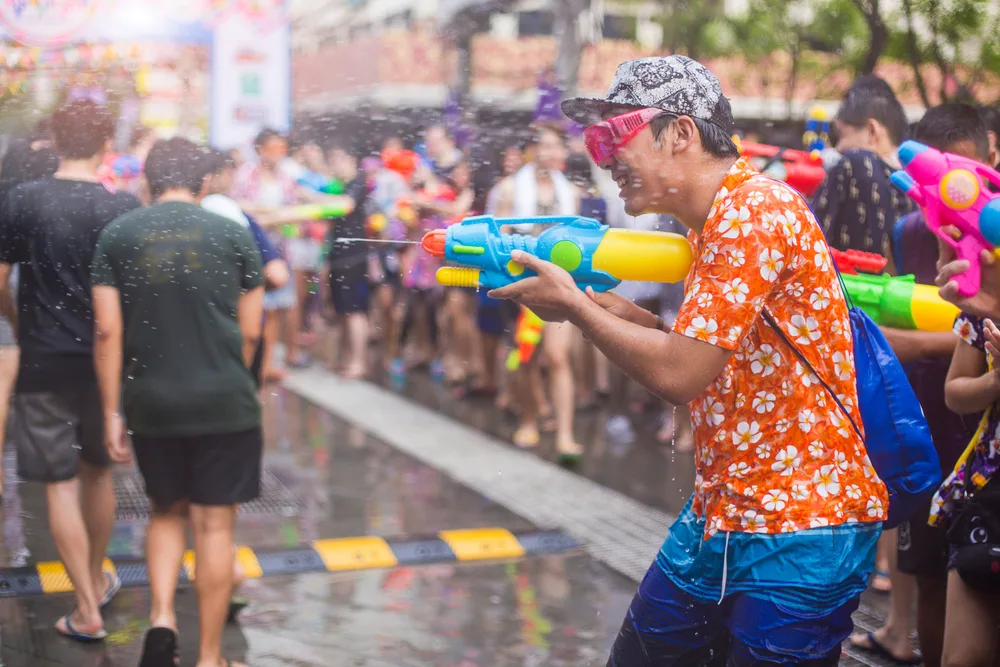
Visit Thailand during Songkran and staying dry may be almost impossible. Songkran marks the traditional Thai New Year. Water has long been used symbolically during the celebration, with scented water gently poured over Buddha statues and the hands of elders as a sign of respect, purification and good fortune.
Over time, the public celebrations have grown into enormous water fights. Streets fill with people carrying buckets, hoses and water pistols, particularly in destinations such as Bangkok, Chiang Mai and Phuket.
While the water fights attract plenty of attention, Songkran remains an important cultural occasion. Many people visit temples, spend time with family, make offerings and take part in traditional ceremonies.
What should visitors do?
Expect to get wet whenever you leave your accommodation in busy celebration areas. Use a waterproof pouch for your phone and documents, wear shoes with a good grip and avoid swallowing the water. Never throw water at monks, babies, older people or anyone who clearly doesn’t want to participate. Water fights should also stop once you enter temples, hotels and other designated dry spaces.
3. Being welcomed with a hongi in New Zealand
Where: Aotearoa New Zealand
When: During some Māori welcomes and cultural experiences
Visitors taking part in a pōwhiri – a formal Māori welcoming ceremony – may be greeted with a hongi.
The hongi commonly involves shaking hands and gently pressing noses. Foreheads may also touch. It represents the sharing of ha, or the breath of life, and symbolises people coming together.
A pōwhiri can include a welcoming call, speeches, songs, the presentation of a gift and the sharing of food. Protocols can vary between marae and communities, so visitors shouldn’t assume that every ceremony will follow exactly the same format.
If you’ve never experienced a hongi, it can be difficult to know which way to move or how firmly to make contact. Fortunately, nobody expects a visitor to perform it perfectly.
What should visitors do?
Follow the lead of your hosts and wait until the hongi is offered. Move slowly, make gentle contact and avoid turning it into an exaggerated nose rub. During the wider ceremony, listen carefully and follow any instructions given by your guide or hosts.

4. Taking your shoes off in Japan
Where: Across Japan
When: When entering certain homes, accommodation, restaurants and traditional spaces
Removing your shoes before entering a home is common in several countries, but Japan can take the custom a step further.
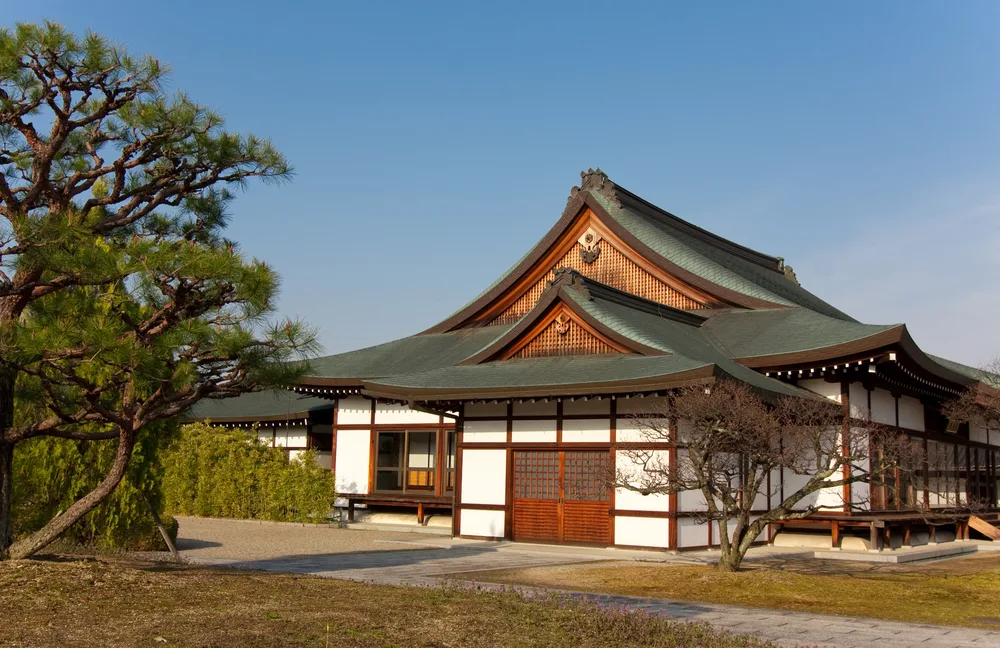
At the entrance to a Japanese home, traditional inn or certain restaurants, you may find a lowered area called a genkan. Outdoor shoes are removed here before stepping onto the raised interior floor. Slippers may be provided, although these should usually be removed before walking on tatami matting.
You may also be given separate toilet slippers. These are only intended for the bathroom – accidentally walking around the building in them is an uncomfortable mistake many visitors are keen to avoid.
The custom helps keep dirt from the street out of interior living spaces and is an important part of Japanese etiquette.
What should visitors do?
Look for signs, rows of shoes or a change in floor level when entering. Remove your shoes without stepping onto the clean raised floor in your socks, then place them neatly with the toes facing towards the exit. Wear clean socks and remember to change out of any toilet slippers before leaving the bathroom.
5. Watching an entire town throw oranges in Italy
Where: Ivrea, Piedmont
When: During the Carnival of Ivrea
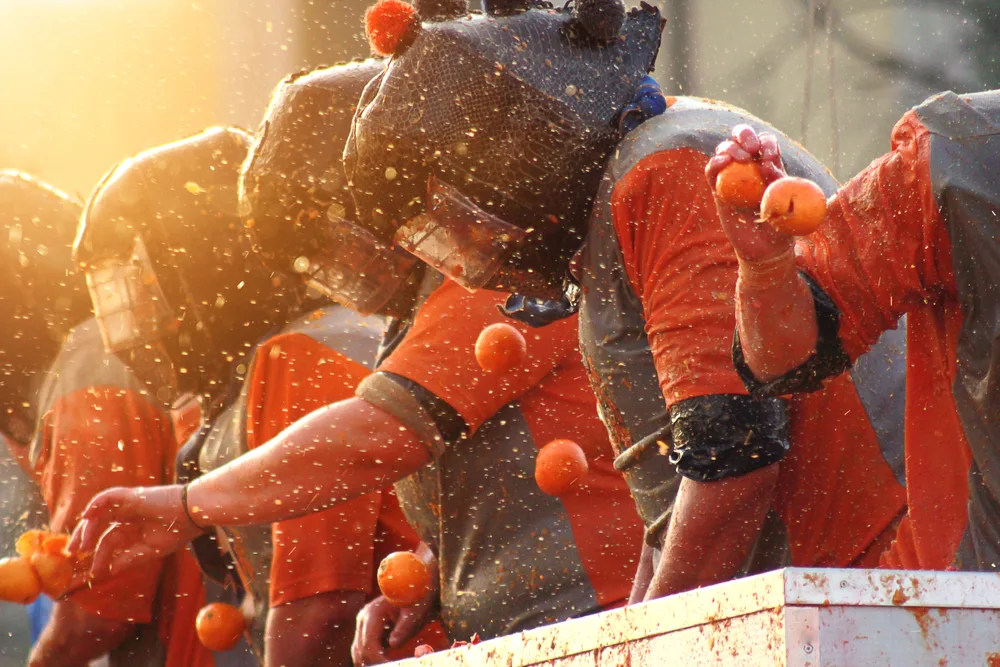
Every year, the northern Italian town of Ivrea stages what is believed to be the largest food fight in Italy – but this isn’t simply an excuse to throw fruit.
The Battle of the Oranges forms part of Ivrea’s historic carnival and represents a legendary popular uprising against a tyrant. Organised teams on foot throw oranges at opponents riding on horse-drawn carts, transforming the town’s main squares into remarkably colourful battlegrounds.
Participants wear team uniforms, while those on the carts use padded clothing and protective helmets. Thousands of spectators watch from behind safety nets or follow designated routes through the town.
The spectacle can look chaotic, but it is governed by rules and carries considerable meaning for the local community.
What should visitors do?
Don’t join the battle unless you’ve officially registered with a team. Spectators who don’t want to participate traditionally wear a red cap, although this doesn’t guarantee that a stray orange won’t come their way. Follow local safety instructions, stay behind protective netting where required and wear clothes that can survive orange juice, pulp and mud.
6. Welcoming flower-crowned cows in Switzerland
Where: Alpine regions of Switzerland
When: Usually from mid-August to September
At the end of summer, farming communities across Switzerland welcome cattle back from their high Alpine pastures.
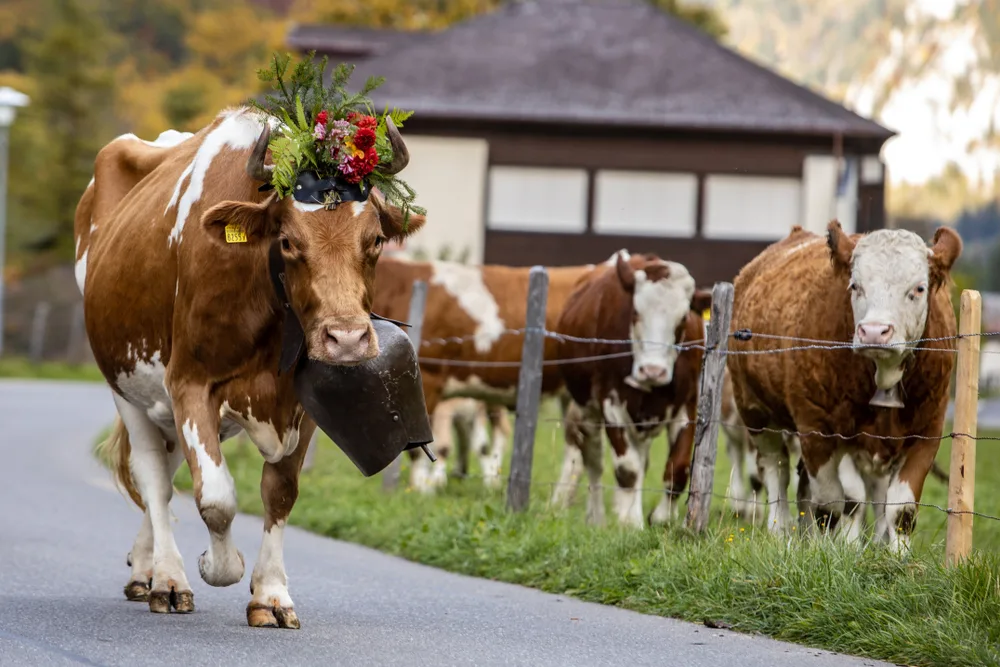
Known by names including Alpabzug and Désalpe, the cattle descent can turn an everyday farming journey into a colourful village celebration. Cows may wear enormous bells and elaborate crowns made from flowers, branches, ribbons and decorative panels.
The most productive cows or those chosen to lead the herd may receive particularly impressive decorations. Markets, traditional music, local food, costumes and demonstrations of regional crafts often accompany the procession.
The tradition was originally a way to give thanks for the safe return of the animals and farmers after a summer in the mountains.
What should visitors do?
Check the local date shortly before travelling because the descent can depend on the weather and conditions in the mountains. Stand well back from the route, follow instructions from farmers and never approach or touch the animals without permission. Large bells, crowds and unfamiliar surroundings can make the cattle unpredictable.
7. Playing air guitar competitively in Finland
Where: Oulu, Finland
When: Usually August
You don’t need an instrument to become a world champion in Oulu. You just need the confidence to pretend you’re playing one.
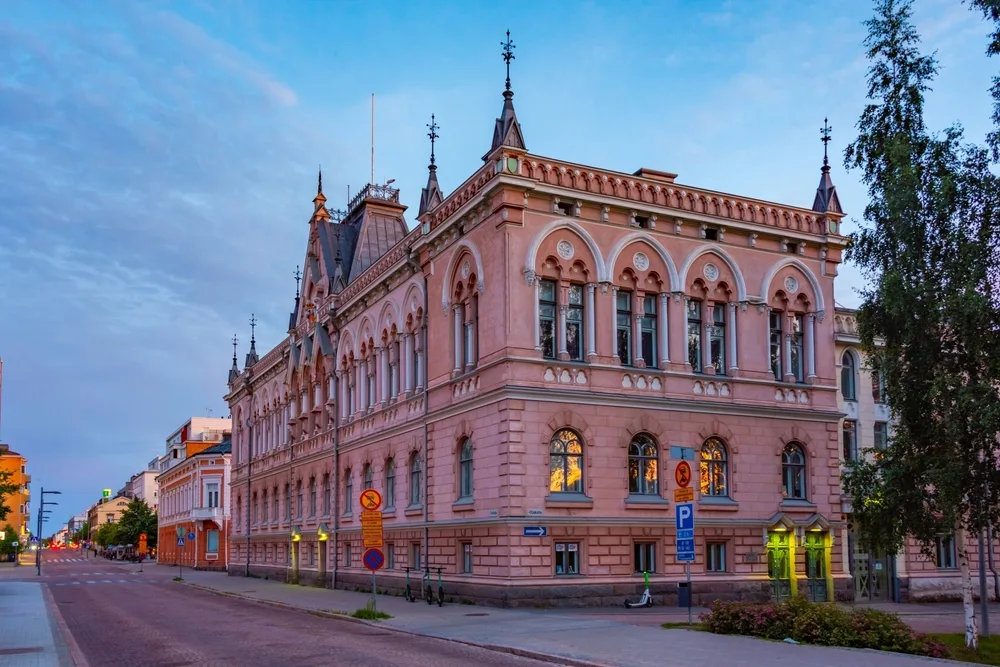
The Air Guitar World Championships have been held in the Finnish city since 1996. Competitors perform on stage with imaginary guitars, combining exaggerated playing, costumes, facial expressions and rock-star energy.
Although the performances are deliberately playful, entrants take the competition seriously. They’re judged on elements including technical merit, stage presence and how convincingly the performance captures the spirit of air guitar.
The event also has a surprisingly sincere message. Its organisers promote world peace through the idea that people holding imaginary guitars can’t hold weapons.
Finland is home to several other wonderfully unconventional competitions, including wife carrying, swamp football, tree hugging and heavy-metal knitting.
What should visitors do?
Spectators only need to arrive ready to embrace the silliness. If you want to compete, check the official entry requirements well in advance. Qualifying events are held in several countries, while some participants may be able to enter through a preliminary round in Finland.
8. Meeting Krampus in Austria
Where: Austria, particularly Alpine regions
When: Around 5 December
December celebrations aren’t always filled with cheerful elves and friendly reindeer.
In parts of Austria, Saint Nicholas is accompanied by Krampus – a horned, fur-covered figure with a frightening carved mask. While Saint Nicholas traditionally rewards well-behaved children, Krampus is associated with warning or punishing those who have misbehaved.
During a Krampuslauf, or Krampus run, groups wearing elaborate costumes parade through towns with bells, chains and torches. The masks are often handmade, and some can be startlingly realistic.
For visitors expecting a peaceful Christmas market, suddenly encountering a street filled with towering horned creatures can be quite a surprise. However, the custom has deep roots in Austria’s Alpine winter traditions.
What should visitors do?
Check the nature of the event before attending, especially if you’re travelling with children or dislike loud noises and frightening costumes. Stay behind barriers where provided and don’t interfere with performers. Organised family-friendly events may offer a gentler introduction to the tradition.

9. Being the first person through the door in Scotland
Where: Across Scotland
When: Just after midnight on New Year’s Eve
In Scotland, the first person to enter a home after midnight can supposedly influence the household’s luck for the year ahead.
Known as first-footing, the tradition forms part of Hogmanay – Scotland’s New Year celebrations. The first-footer traditionally arrives carrying symbolic gifts such as shortbread, whisky, coal or salt, representing food, warmth, prosperity and good cheer.
According to folklore, a tall, dark-haired visitor was once considered the luckiest person to cross the threshold first. This may date back to the days of Viking raids, when the arrival of a fair-haired stranger wasn’t always a welcome sight.
Today, first-footing is usually a sociable occasion involving visits to friends and neighbours after midnight, often accompanied by food, drinks and plenty of conversation.
What should visitors do?
If you’re invited to go first-footing, don’t arrive empty-handed. A small gift such as shortbread or whisky is a safe choice. Wait until after midnight before entering and be prepared for celebrations to continue well into New Year’s Day.

How to experience local traditions respectfully
Seeing a local tradition can become one of the most memorable parts of a holiday. However, it’s important to remember that an event created for a community isn’t automatically a performance for visitors.
A few simple steps can help you take part respectfully:
- Learn before you arrive: Read about the history and meaning of the tradition, not just what it looks like in photographs
- Follow local instructions: Pay attention to signs, organisers, guides and the people around you.
- Ask before taking photographs: This is particularly important during religious ceremonies, inside places of worship and when photographing individuals.
- Don’t assume you’re invited to participate: Some customs welcome everyone, while others are intended for specific groups or communities.
- Dress appropriately: Check whether shoulders, knees or heads need to be covered when visiting religious or culturally important places.
Keep an open mind: A custom doesn’t need to make sense within your own culture to hold deep meaning for somebody else.
Check current travel information: Visit Smartraveller for advice about local laws, safety, entry requirements and health risks at your destination.
Prepare for more than the traditional customs
Learning about local traditions can help you avoid awkward misunderstandings, but cultural preparation is only one part of planning a holiday.
Unexpected illness, injury, cancellations and lost or delayed luggage can affect even a carefully organised trip. Having Travel Insurance in place may help with eligible unexpected costs, depending on your policy and the circumstances of your claim.
If you live with a pre-existing medical condition, remember to declare it when getting your quote. Please read our Product Disclosure Statement (PDS) and Target Market Determination (TMD) to make sure this cover is right for you.
The best travel surprises are the ones that leave you with a brilliant story to tell – whether that involves flower-covered cows, flying oranges or an air guitar solo you never expected to see.
Important notice
Any advice provided is general in nature and does not take into account your particular needs and circumstances. Before purchasing the insurance, decide whether this product is right for you by reading the combined Product Disclosure Statement and Financial Services Guide. A Target Market Determination for this product is also available.
You should obtain a copy of the Product Disclosure Statement (PDS) and Target Market Determination (TMD) and consider the PDS and TMD before making any decision whether to acquire the general insurance product .*
The PDS and TMD can be obtained at https://www.allcleartravel.com.au/policy-wordings.
This insurance is underwritten by the insurer Europ Assistance Australia Pty Ltd (EAA) ABN 71140219594, AFSL 552106. AllClear Insurance Services Pty Ltd, ACN 165 270 066, trading as AllClear Travel Insurance, is an Authorised Representative (AR number 1311154) appointed by EAA to distribute and administer this insurance product.
Related Posts
Get expert takes on travel trends, safety updates, and destination news to make smarter travel decisions.